
Screenshot
Sydney’s got no shortage of artists who will tattoo you a dragon. Picking the right one for Japanese work is a different question, and most of the advice out there is useless — “check the reviews, look at the Instagram.” Everyone’s Instagram looks good. Here’s what actually tells you something.
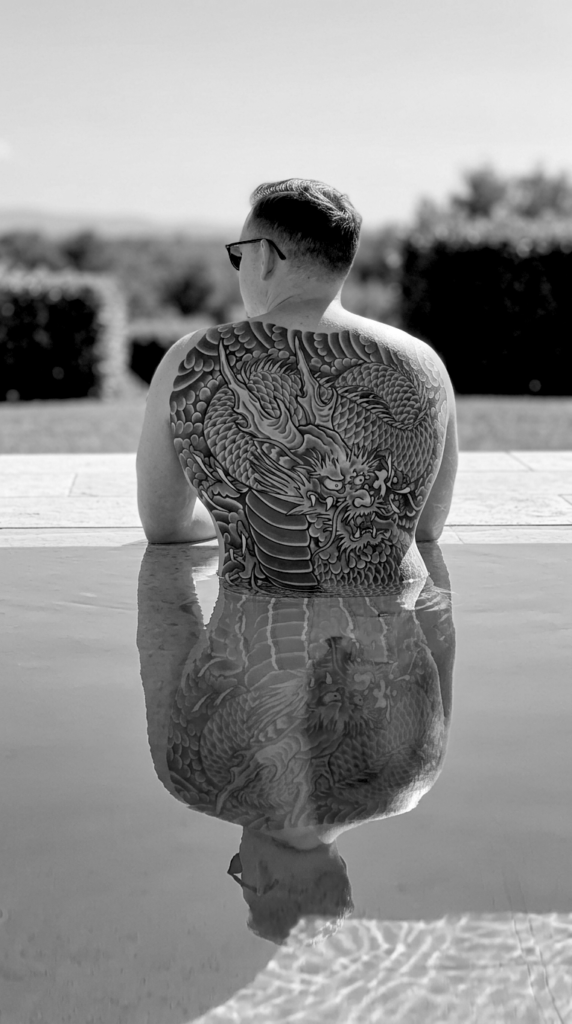
Look for depth, not variety. A lot of artists do a bit of everything — some Japanese, some fine-line, some lettering. Fine for a small piece. But real Japanese work is a whole language, and you want someone who lives in it, not someone who visits. Scroll the portfolio. Is it years of Japanese pieces, or a dragon sitting between a name tattoo and a butterfly? Go with the person who’s focused with one thing over the artist who does ten.
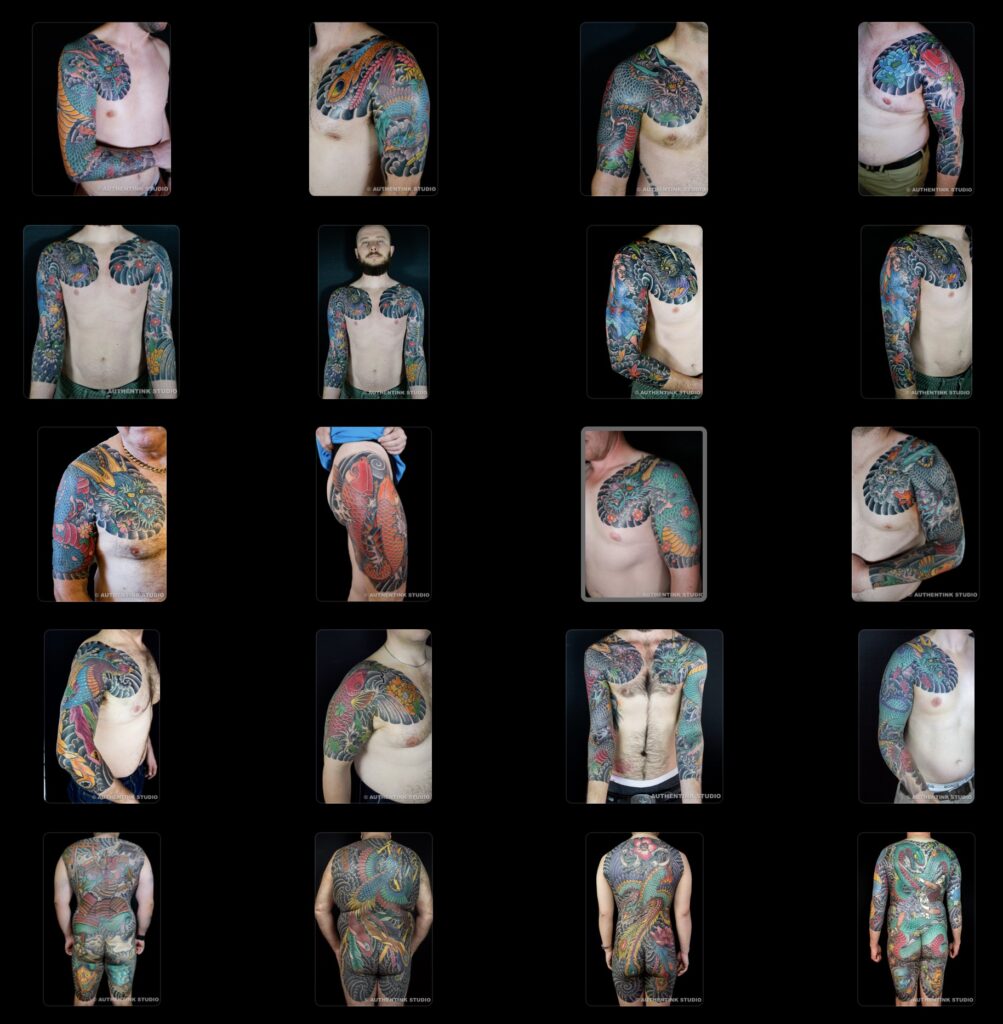
Ask to see healed work. Anyone can post a fresh tattoo under good lighting — it’s wet, it’s sharp, it photographs beautifully. The real test is what it looks like in five years. A serious tattooer will happily show you healed pieces, because they’re proud of how their work ages. If all you can find is fresh photos, ask why.
See if they think in macro. This is the big one for Japanese. Even if you’re starting with a sleeve, the right artist is already thinking about how it could grow — how it flows with your body, where the background sits, how it’d tie together if you kept going. Stencil the picture on and call it done, that’s Japanese-style. Plan it like it will become a bodysuit one day, that’s irezumi.
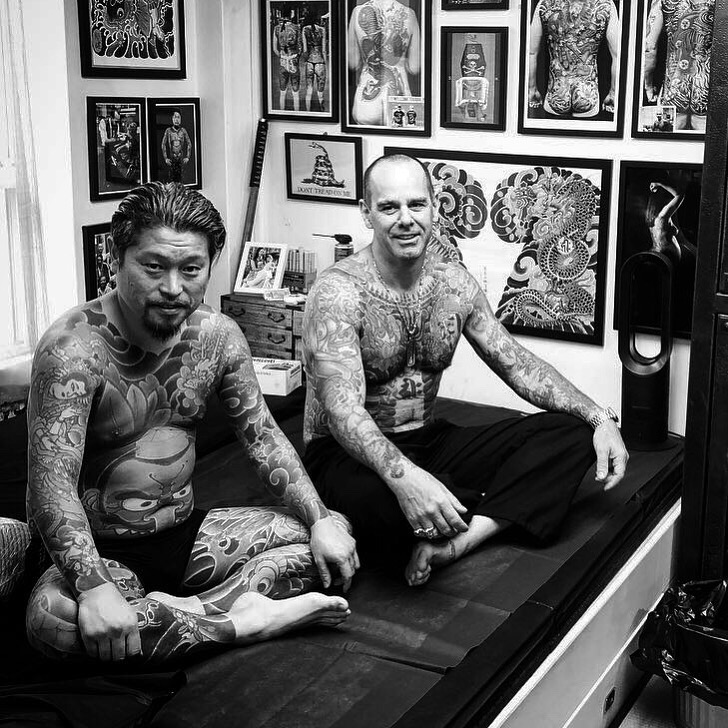
Ask who taught them. This one cuts through everything else. Japanese tattooing is a tradition — it gets passed down, hand to hand, master to student. So ask. Where did they learn it? Who from? Someone who trained inside the tradition talks about it completely differently than someone who learned the look off a screen or a book. You’ll hear the difference in about ten seconds.
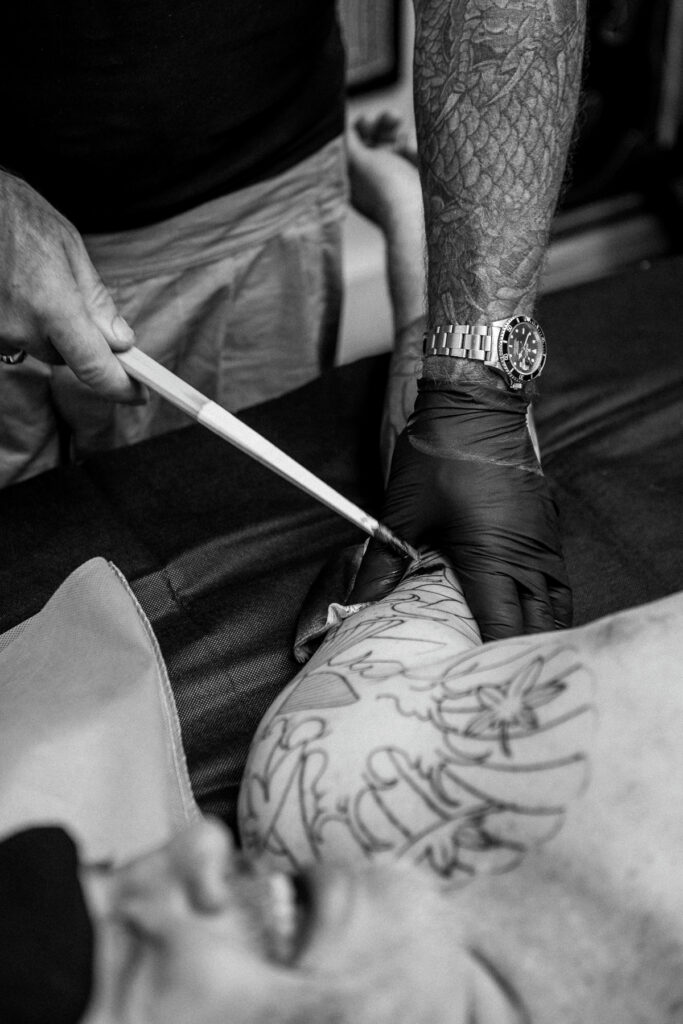
And if you want it done the old way — by hand, tebori — ask directly, because almost nobody in Sydney can. It’s rare for a reason. It’s not better for everyone. But if that’s what you’re after, there are very few doors to knock on.
One last thing. Price. I’m not going to tell you to spend a fortune, but be suspicious of cheap. Good Japanese tattooing takes years to learn and hours to do properly, it can’t be rushed — someone knocking it out fast and cheap isn’t a bargain, it’s a warning. You get what you pay for, same as anything you’re keeping for life.
Do all that and you’ll find the right person — whether it’s us or not. But if you want Japanese work done properly, by someone who’s spent a life in it, come and have a chat. No rush. That’s kind of the whole idea.
— Horisumi