
Walk past most tattoo studios and you’ll hear the same thing. Nothing. You’ll hear nothing — no machine, no talking. The wand machine dominates now, and so does modern tattoo culture. It’s the sound, or shall I say the lack of sound, of the trade these days: tattooers on silent machines, headphones on, lost in their own worlds, tattooing away. Machines are great — I use them for outlines. The traditional ones, the classic ones, the ones that make noise and remind you what a tattoo shop used to be.
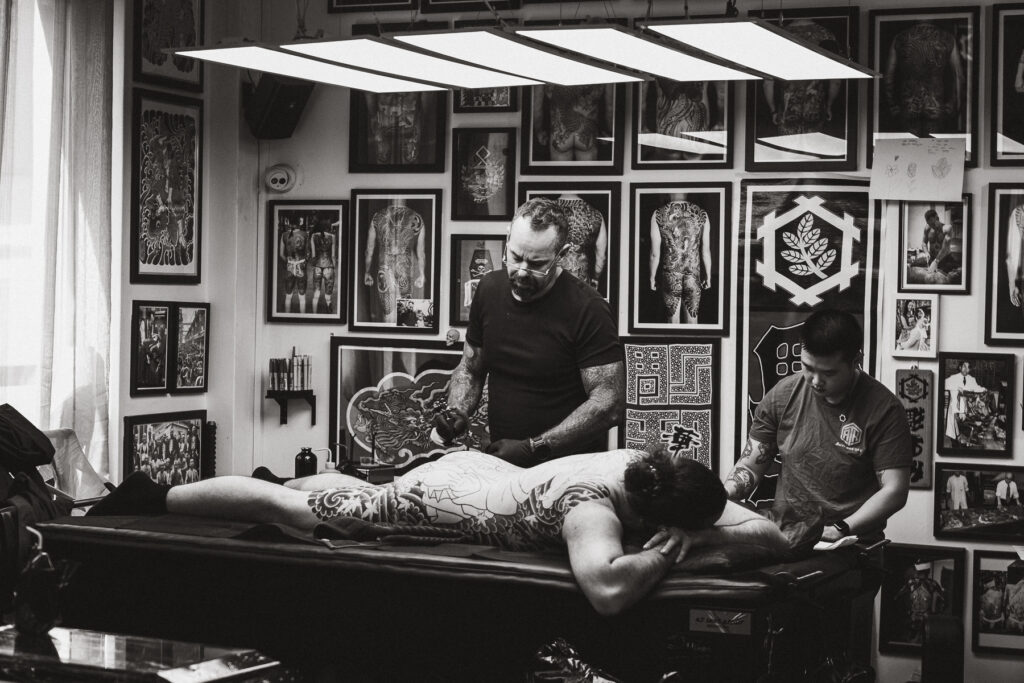
ScreenshotBut there’s an older sound. Quieter, but distinct. Just the flick of needles into skin, by hand, over and over, for hours. Shaki, it’s called. Unmistakable. That’s the sound of tebori and it is a hypnotic sound that captivates both client and spectator and keeps you entranced.
Tebori means “to carve by hand.” It’s how Japanese tattoos — irezumi — were made for a few hundred years before the machine ever turned up. No machine. A wooden, usually bamboo, or metal rod, a cluster of needles at the tip, Sumi ink, and an artist who’s spent years learning to control it. You dip, you angle, you insert the ink with a rhythm. Thk, thk, thk. That rhythm is the whole thing.
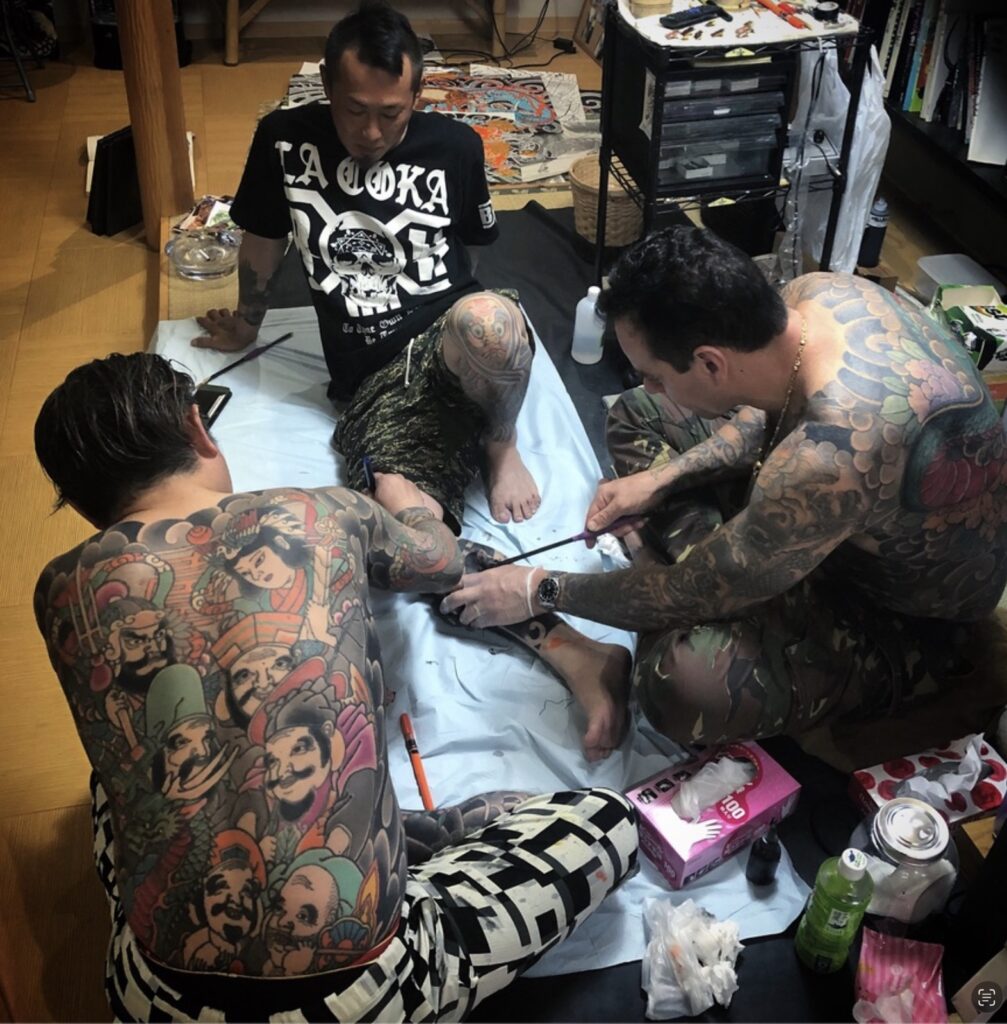
I didn’t learn it here in Australia. I learned it in Gifu, Japan, from Sensei Horikashi — sitting on the floor, doing it wrong for a long time before I did it right. That’s how it gets passed down: hand to hand, master to student, the same way it has been for generations. You don’t do a weekend course in tebori. It takes years, and it takes someone willing to share it with you.
So why bother, when a machine is faster?
Because faster was never the point. Think about anything made properly by hand — a good knife, a pair of boots that outlast three cheap ones, a bottle of wine with a story behind it instead of a goon bag. You can feel the difference even when you can’t name it. Tebori’s the same. In the right hands the shading — we call it bokashi, those soft gradients that make a Japanese back-piece look like shimmering silver and black — comes through in a way that’s hard to get any other way. The skin takes it differently. It sits differently.
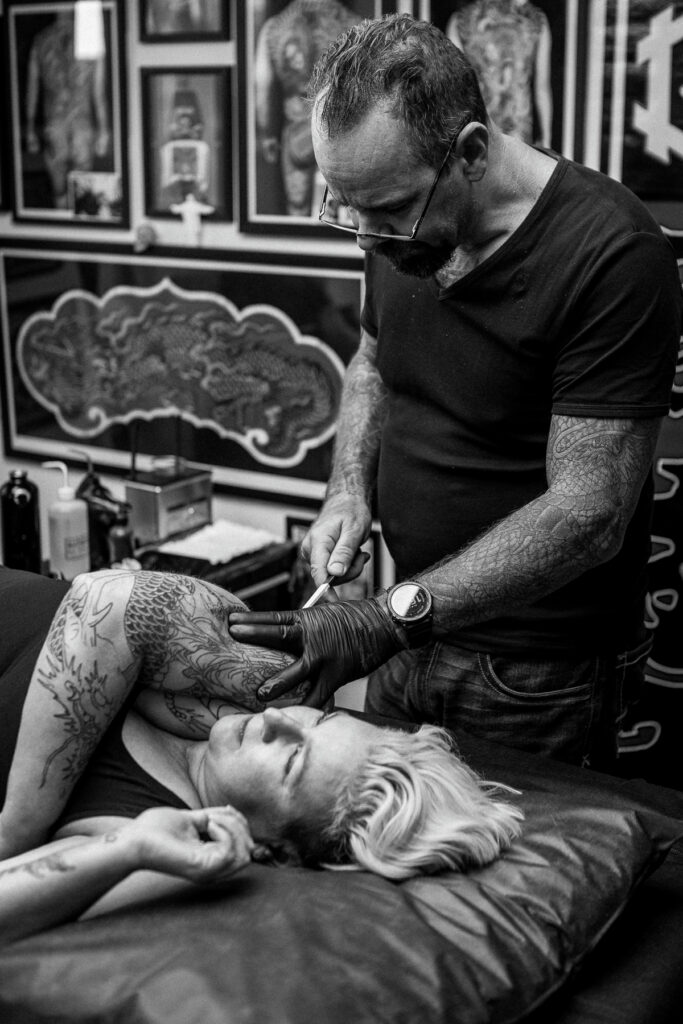
And there’s the feel of it, lying on the mat. It’s slower. It’s calmer. No machine buzzing next to your ear for six hours, no machine scraping across your skin over and over. People who’ve had both tell me the same thing — the machine is a procedure, the hand is more like being worked on. Present. A different kind of experience.
Here’s the honest part, though. Tebori isn’t magic, and it isn’t better just because it’s older. A bad tebori tattoo is still a bad tattoo. What matters is the hand holding the tool and the years behind it. That’s true of anything worth having.
There’s nobody doing real tebori in Sydney that I know of apart from me. It’s rare because it’s hard, and it’s hard because it’s meant to be. That’s exactly why it’s still around — the fast, cheap version of everything else got faster and cheaper, and this one stayed put. Some things are worth keeping the old way: drawing directly on skin, planning and prepping on paper, and tattooing by hand.
If you’re thinking about a irezumi and you want it done by hand — or you’re just curious — organise a chat with me. No rush. That’s kind of the whole idea.
— Horisumi