
People think a bodysuit is a big tattoo. It isn’t. It’s a small tattoo’s entire extended family, moved in permanently — and if you don’t plan for the whole family from day one, you end up with a house full of strangers who don’t talk to each other.
Let me walk you through how large-scale Japanese work actually gets built, because almost nobody explains this properly, and it’s the difference between a suit and a mess.
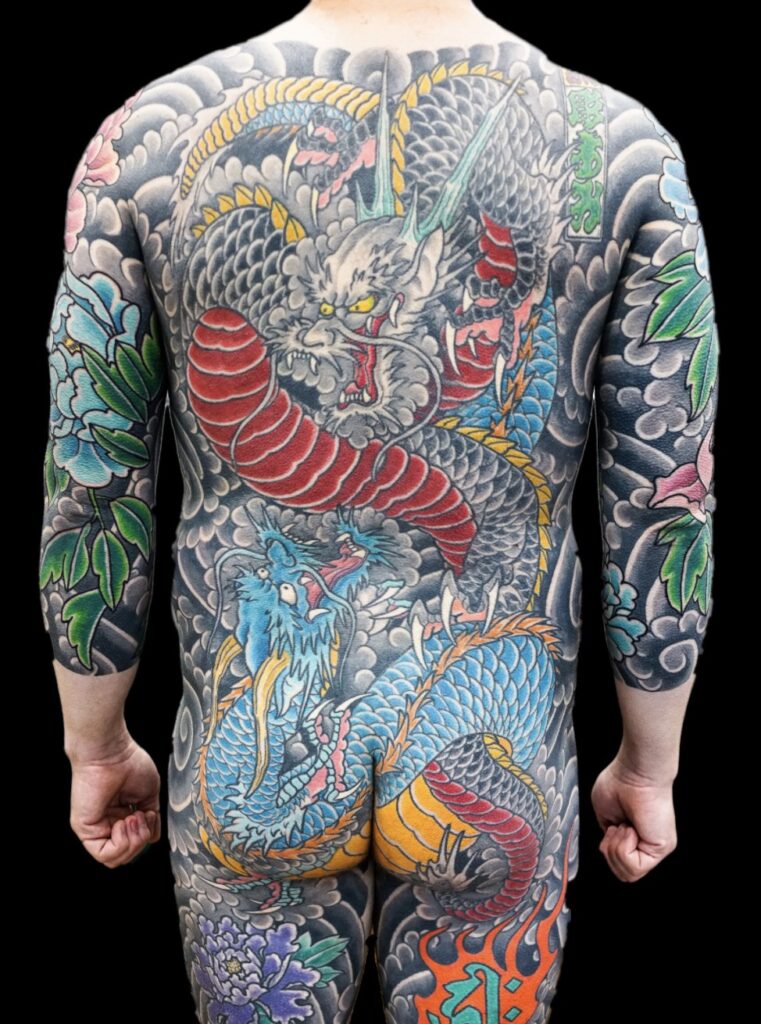
The back is the largest unbroken canvas on the human body, and in Japanese bodysuit tattooing it’s the anchor of everything. Whatever goes there — dragon, koi, warrior, snake — sets the theme, the direction, and the mood for every piece that follows. Sleeves, chest panels, thighs: they all grow outward from the back, the way branches grow from a trunk.
This is why I’ll sometimes slow a client down when they want to start with a forearm. Not because the forearm’s wrong — because if there’s even a chance you’ll go further one day, the smart move is knowing what the trunk looks like before you plant the branches.
Here’s something that surprises people: the serious planning doesn’t happen on an iPad. It happens on you. I prep and study on paper, but the design gets drawn where it’s going to live — because your back isn’t flat, your shoulders aren’t symmetrical, and no two bodies carry the same dragon the same way. The image has to move when you move. That’s the whole art. A design that looks perfect on a screen and ignores the body it’s on will look rented forever.
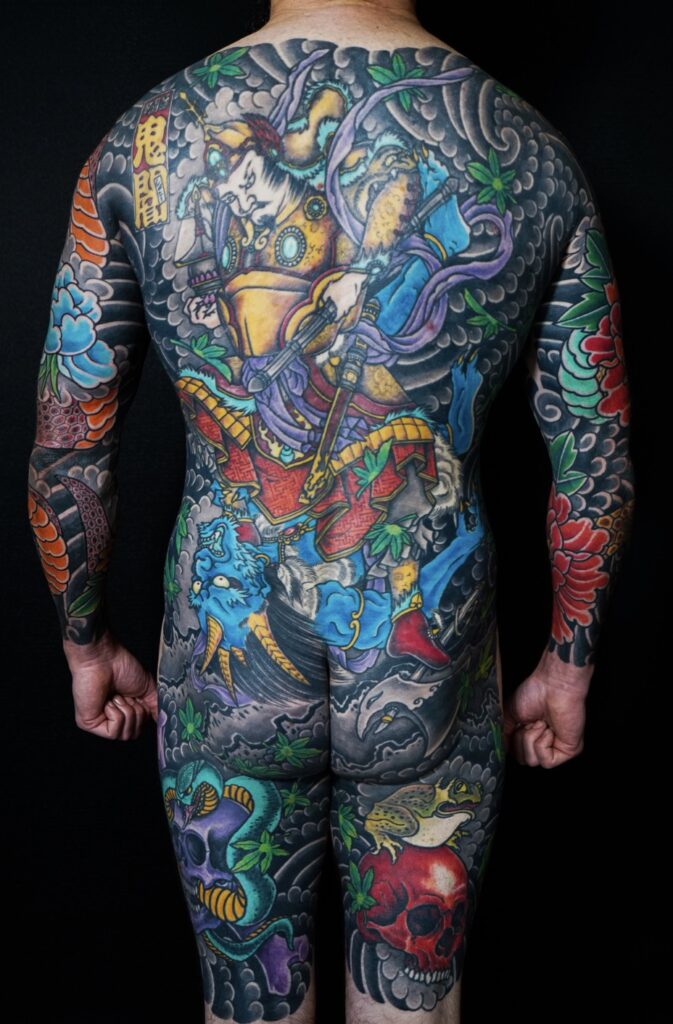
A back piece runs somewhere between ten and thirty sittings depending on size, detail and how you heal. A full suit is a relationship measured in years. The rhythm matters: skin needs weeks to heal between sessions, life gets in the way, winters are easier than summers, and the work is better when nobody’s racing.
I’ll be honest about what that asks of you. Sitting for large-scale japanese bodysuit work is a discipline — you learn your own body, you eat properly, you sleep before sessions, you show up. The people who finish suits aren’t tougher than everyone else. They’re just consistent. It’s the tortoise’s game.
And there’s something that happens across those years that nobody buys on purpose but everyone values in the end: the piece grows with your life. You’ll remember which chapter of your life each stage belongs to. That’s not something a weekend tattoo can ever hold.
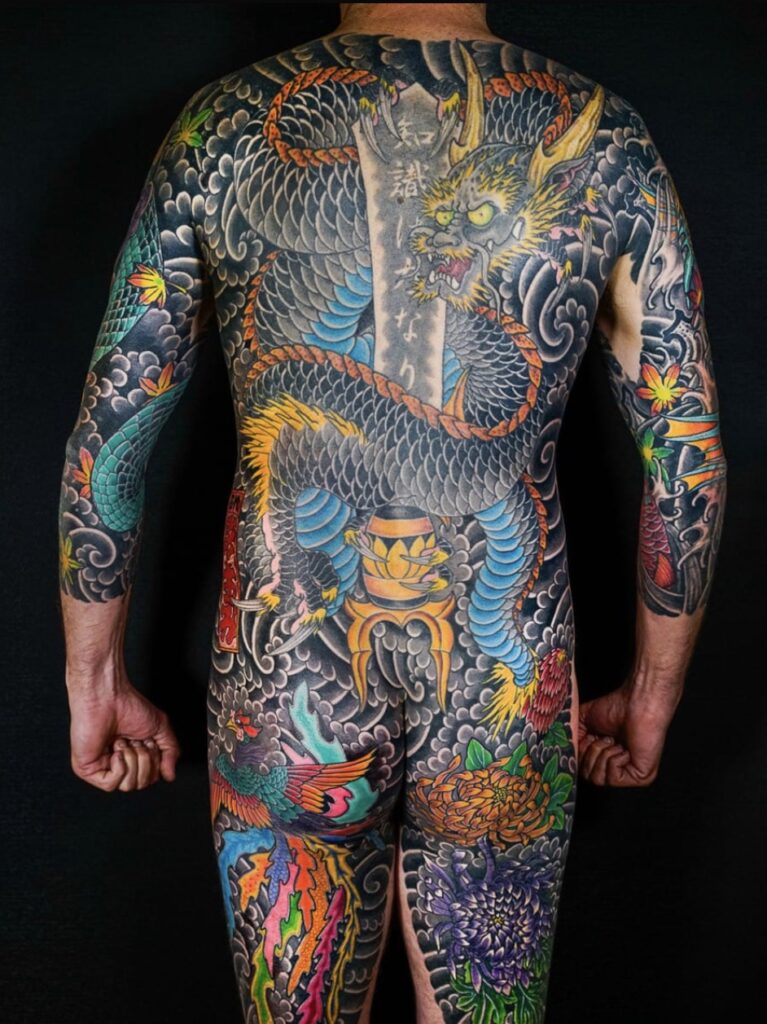
Every so often someone asks me to compress a back piece into a few marathon months. I understand the impulse. But skin has its own calendar, and so does the tradition — this work was never designed to be fast, and the slowness isn’t a flaw in the process. It is the process. You’re not buying a product off a shelf; you’re commissioning something that will outlast every phone, car and jacket you’ll ever own.
Good work, done once, at the pace it demands. That’s the deal.
If you’re thinking about large-scale work
Come talk to me before you get anything placed near the areas a suit would use — even if the suit is just a maybe. Thirty minutes of planning now saves years of working around a piece that’s sitting in the wrong spot. Consults are free, in person or video, seven days.
Start with the trunk. The branches will know what to do.
— Kian “Horisumi” Forreal
Authentink Tattoo Studio, Surry Hills · Book a free consultation